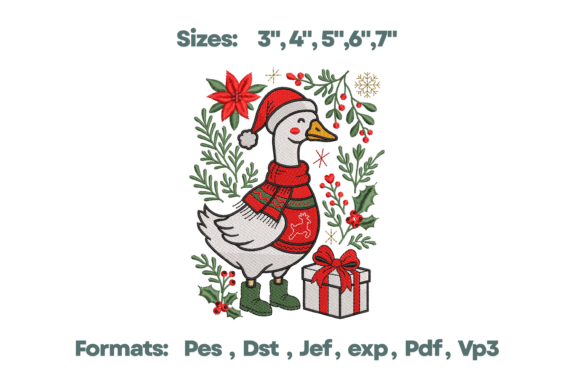
Christmas Goose Sweater Embroidery Review
As an experienced embroidery designer planning my upcoming seasonal collection, I am constantly evaluating which designs will resonate with holiday shoppers while maintaining high production standards. When reviewing the Christmas Goose Sweater Embroidery for potential inclusion in a farmhouse-style holiday lineup, my first impression is overwhelmingly positive regarding its emotional tone. This design captures a specific niche that is currently dominating the handmade market: cozy, nostalgic, and unpretentious festive charm. The image of a cheerful goose dressed in a reindeer sweater, Santa hat, and rubber boots strikes a perfect balance between playful and rustic. It avoids the overly commercial or religious aesthetic that can sometimes limit sales, making it an excellent candidate for a broad demographic ranging from young families to traditional decor enthusiasts.
Evaluating Seasonal Appeal and Market Trends
In the current landscape of holiday embroidery, buyers are seeking items that feel authentic and warm. The Christmas Goose Sweater Embroidery succeeds because it tells a story. It is not merely a bird; it is a character participating in the season. For an Etsy seller or small business owner, this narrative quality is crucial. When customers scroll through digital listings, they are looking for a feeling as much as a product. This design evokes memories of country living, winter mornings, and handmade comfort. As a machine embroidery design, it offers significant versatility. Unlike complex scenic landscapes that require large hoops and hours of stitching, this character-based motif is likely optimized for standard sizing, making it accessible for various projects without overwhelming the base item.
From a stylistic perspective, the combination of the reindeer sweater texture and the smooth rubber boots suggests a mix of stitch types that will add visual interest to the finished product. The Santa hat provides a necessary pop of traditional red, anchoring the design firmly in the Christmas category while the overall palette remains soft enough for year-round farmhouse appeal if marketed correctly. This duality increases the return on investment for the digital embroidery file, as it can transition from peak holiday sales into general winter merchandise.
Best Applications for Holiday Product Lines
When integrating this design into a shop collection, I recommend focusing on items that enhance the cozy aesthetic. Sweatshirt embroidery is perhaps the most lucrative application here. A cream or sage green sweatshirt featuring this goose on the left chest creates an instant bestseller for casual holiday wear. The design’s inherent cuteness also makes it ideal for children’s apparel and baby gifts, provided the size is scaled appropriately. For home decor, kitchen towel embroidery utilizing this motif would perform exceptionally well, especially when paired with waffle weave or flour sack fabrics that complement the farmhouse theme.
- Tote Bag Design: Use natural canvas totes to highlight the rustic nature of the goose. This works beautifully for gift bundles filled with hot cocoa mix or baked goods.
- Pillow Cover: Create throw pillows for entryway benches or reading nooks. The rubber boot detail adds a whimsical touch that stands out against neutral linen backgrounds.
- Embroidered Patch: Consider stitching this design onto felt backing to create iron-on patches. These are low-cost add-ons for craft fairs and allow customers to customize their own denim jackets or bags.
- Personalized Gift: Add a family name or date below the goose to transform it into a keepsake ornament or anniversary gift.
For social media marketing, this design is highly photogenic. Creating a printable mockup or staging a flat lay with pine boughs and cinnamon sticks will drive engagement. The distinct silhouette of the goose ensures brand consistency across different product types, helping customers instantly recognize your seasonal collection.
Technical Considerations and Production Cautions
While the aesthetic is charming, technical execution determines customer satisfaction. Before listing any item featuring the Christmas Goose Sweater Embroidery, you must verify the stitch density. The reindeer sweater element likely involves textured fill stitches. If the density is too high, it can cause puckering on lighter fabrics like quilting cotton or t-shirt knits. Conversely, if it is too sparse, the fabric may show through, ruining the illusion of a cozy garment. Always run a test stitch-out on the exact fabric texture you intend to sell. What works on a sturdy tote bag may fail on a stretchy performance fleece.
Pay close attention to the hoop size requirements listed in the product description. Do not attempt to resize this design significantly beyond its original parameters without checking the integrity of the details. The facial expression of the goose and the trim on the Santa hat are likely composed of fine satin stitches or running stitches. Reducing the design too much can cause these elements to merge, resulting in a muddy appearance. Similarly, enlarging it excessively may reveal gaps in the fill patterns. Always confirm the dimensions against your machine's capabilities and the usable area of your intended blanks.
Stabilizer choice is non-negotiable. For the rubber boots and sweater layers, a medium-weight cutaway stabilizer is generally safer than tear-away to prevent distortion during washing. If embroidering on dark fabrics, ensure the thread colors have sufficient contrast. White or light grey underlay is essential to make bright holiday colors pop against navy or black sweatshirts. Finally, review the licensing terms of the embroidery file before mass production. Ensure you have the right to sell finished products commercially, especially if you plan to use this design for limited edition drops or wholesale accounts.
Enhancing Value Through Strategic Presentation
The perceived value of seasonal embroidery relies heavily on presentation. Because this design features specific clothing items (sweater, hat, boots), color matching is vital. Test your thread palette on both light and dark bases to ensure the reindeer pattern on the sweater is visible and the red of the hat is vibrant but not bleeding. Document these successful color combinations so you can replicate them efficiently during the busy holiday rush. Consistency builds trust; customers who buy a kitchen towel should be able to purchase a matching pillow cover with identical thread shades.
Consider the longevity of the item. Since this is a handmade gift intended for seasonal celebrations, it must withstand repeated use and laundering. Secure all jump stitches and trim threads meticulously. A loose thread on the goose’s beak or boot can unravel quickly, leading to negative reviews. Quality control is what separates professional shops from hobbyists. When photographing your samples for listings, show close-ups of the stitch definition. Buyers want to see the texture of the reindeer sweater and the sheen of the rubber boots. High-quality macro photography validates the price point and reassures buyers of the craftsmanship.
Ultimately, the Christmas Goose Sweater Embroidery is a strong contender for any holiday collection targeting the modern farmhouse demographic. Its blend of humor, tradition, and coziness aligns perfectly with current buyer emotions. By respecting the technical requirements of the commercial embroidery process and applying thoughtful product development strategies, this design can become a cornerstone of your seasonal revenue. Whether used for a quick-turnaround craft fair item or a premium personalized sweatshirt, it carries the warmth and joy that define successful holiday selling.