Funny Cat Christmas: A Designer’s Craft Fair Review
As an experienced embroidery designer preparing for the upcoming holiday market season, I approach every new machine embroidery design with a critical eye. It is not enough for a file to simply stitch out cleanly on my screen; it must translate into a profitable craft fair product that catches the attention of shoppers walking past a crowded booth. When evaluating the "Funny Cat Christmas" design, my primary focus is on its commercial viability for handmade sellers, Etsy shop owners, and boutique makers who need inventory that moves quickly during the short winter selling window.
First Impressions and Market Positioning
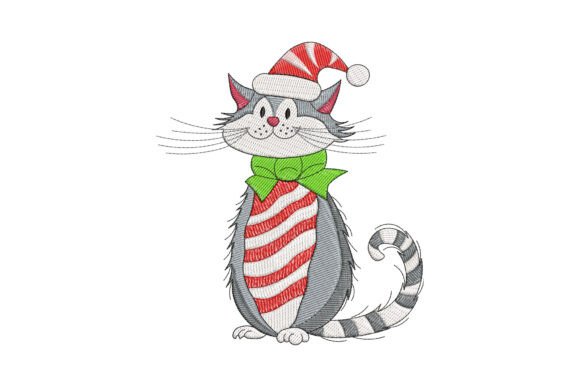
The title "Funny Cat Christmas" immediately signals a specific niche that performs exceptionally well in the handmade community. Based on the description promising a design that is "easy to stitch and full of personality," I categorize this as a high-engagement, impulse-buy aesthetic. In a sea of traditional red-and-green florals, humorous pet-themed embroidery stands out because it connects emotionally with buyers. Shoppers at craft fairs often look for gifts that feel personal and relatable rather than generic. This design likely bridges the gap between festive tradition and modern humor, making it ideal for customers buying for cat-loving friends or treating themselves.
From a production standpoint, the promise of being "easy to stitch" suggests optimized stitch density and manageable run times. For a small business owner producing batch inventory for a weekend market, efficiency is profit. A design that requires excessive color changes or complex re-hooping slows down production. If this embroidery file maintains its personality without demanding ten hours of machine time, it becomes a staple asset for high-volume holiday prep.
Best Applications for Booth Inventory
When planning my table display, I evaluate where a design generates the highest perceived value. While the product description highlights t-shirts, tote bags, and decorative fabric pieces, my experience suggests specific applications yield better sales conversion for this category.
- Tote Bag Design: Canvas totes are the premier canvas for funny holiday art. The sturdy fabric texture holds stitches well, and the large surface area allows the cat’s personality to shine. At a craft fair, these serve as walking advertisements when customers carry their purchases.
- Tea Towel Embroidery: Kitchen linens are top-tier holiday sellers. A funny cat motif transforms a utilitarian item into a giftable keepsake. Flour sack towels, in particular, offer a smooth weave that ensures crisp detail definition for facial expressions or text elements within the design.
- Apron Embroidery: Holiday baking is a massive seasonal activity. Placing this design on a bib-style apron creates an immediate narrative connection. Buyers visualize wearing it while hosting parties, increasing the emotional attachment to the finished product.
- Embroidered Patch: For vendors wanting lower price-point items, converting this design into a patch allows for versatile use on denim jackets or backpacks. This maximizes the utility of a single digital embroidery file across multiple product types.
Production Practicalities and Selling Points
For fellow Etsy sellers and creative entrepreneurs, the practicality of "Funny Cat Christmas" extends beyond aesthetics. Visual clarity at a glance is paramount in a physical retail environment. Customers typically spend less than three seconds scanning a booth before deciding to stop. Humorous designs rely heavily on readability; if the joke or the character expression cannot be understood from five feet away, the sale is lost. I recommend stitching this design at the largest recommended size to preserve those crucial personality details.
Photographing this design for online listings also requires strategy. Because humor is subjective, your printable mockup or product photography must convey the mood instantly. Flat lays work well for tea towels, but lifestyle shots are superior for tote bags and apparel. Showing the item in use helps digital buyers understand the scale and charm of the embroidery, bridging the gap between a digital file and a tangible handmade product.
Batch production repeatability is another strength here. Unlike intricate heirloom embroidery that demands constant supervision, a design marketed as "easy to stitch" usually implies consistent registration. This reliability allows me to hoop multiple items and cycle through production runs confidently, knowing that the alignment will hold across twenty tea towels or fifteen tote bags.
Critical Technical Considerations for Makers
Despite the user-friendly description, professional results require diligence. Before listing any commercial embroidery products derived from this file, you must address potential technical pitfalls common to novelty designs.
- Dense Stitch Areas: Humorous designs often feature solid fill areas for fur or clothing. Always check the stitch density in your software. Excessive density on lightweight fabrics causes puckering, while insufficient coverage on dark fabrics leads to show-through. Adjust underlay settings based on your specific substrate.
- Small Lettering and Details: If the design includes witty text, verify legibility at smaller sizes. Satin stitches below 4mm can become difficult to read. Test the minimum viable size before committing to a production run of pouches or caps.
- Fabric Texture Compatibility: While perfect for smooth cotton, textured surfaces like waffle-weave towels or ribbed knits can distort fine details. Use appropriate stabilizer combinations—such as cut-away for stretchy knits and tear-away for stable wovens—to maintain design integrity.
- Curved Surfaces: If adapting this for caps, remember that curved hooping distorts flat artwork. You may need to modify the embroidery file specifically for headwear to prevent gaps or misalignment in the center of the design.
- Thread Color Contrast: Humor dies without contrast. Ensure your thread colors pop against the base fabric. A white cat on cream fabric loses all impact. Always audition thread pairings on scrap material first.
Designer Notes for Commercial Success
As you integrate "Funny Cat Christmas" into your holiday lineup, treat it as a business asset requiring validation. Never assume the hoop size listed in the metadata matches your machine’s usable area; always measure the actual stitch field. Create at least one physical sample before bulk production to verify that the "personality" mentioned in the description translates effectively to your chosen medium. Digital screens can be deceiving, and only a real-world stitch-out reveals tension issues or color blending problems.
Furthermore, confirm your licensing rights. Just because a design asset is available for purchase does not automatically grant unlimited commercial reproduction rights for finished goods. Verify the terms to protect your small shop product line from infringement issues. Finally, consider brand consistency. Does a funny cat align with your existing aesthetic? If your shop specializes in elegant minimalist decor, this might feel disjointed. However, if your brand celebrates whimsy and cozy holiday vibes, this design could be your bestseller.
Ultimately, "Funny Cat Christmas" represents a strong opportunity for makers who understand their audience. By combining efficient production with strategic product placement and rigorous quality testing, this design can elevate your booth display and drive meaningful engagement during the busiest selling season of the year. Approach it with professional standards, and it will reward you with both sales and satisfied customers.